
This reflection was written by Gillian Parrish, President of Parrish Public Relations, and an advisor to the Paying With Our Lives advocacy campaign.
I am deeply honored to be part of the TargetCancer Foundation family. As an advisor to their Paying With Our Lives advocacy campaign, a communications professional supporting their work, and a rare cancer advocate, I’ve witnessed firsthand how vital their mission is—pushing past barriers in rare cancer research while creating critical tools for researchers, patients, and families. This work has never been more important than now, in these uncertain times for our federally-funded medical research system.
Tuesday, September 30, marked Rare Cancer Day, an international day of awareness spearheaded by the National Organization of Rare Disorders (NORD) Rare Cancer Coalition. This day shines a light on the rare cancer community and the unique challenges faced by rare cancer patients, caregivers, families, and researchers. This year’s Rare Cancer Day was particularly meaningful, as TargetCancer Foundation drove several groundbreaking activities that demonstrated the power of advocacy, storytelling, and community mobilization.
A Bipartisan Victory
Congress, through a bipartisan resolution, officially recognized September 30 as Rare Cancer Day. TargetCancer Foundation played a key role as part of the working group that secured the adoption of this important resolution. In a time when our differences seem loud, we must remember what unites us. Universal experiences, like being affected by cancer, bring us together. TargetCancer Foundation extends its gratitude to Representatives Mike Kelly (R-PA), Brian Fitzpatrick (R-PA), Debbie Wasserman Schultz (D-FL), and Debbie Dingell (D-MI) for sponsoring this resolution and for supporting the rare cancer community.
Putting Faces to the Urgent Need for Funding
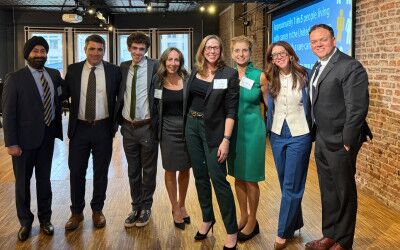
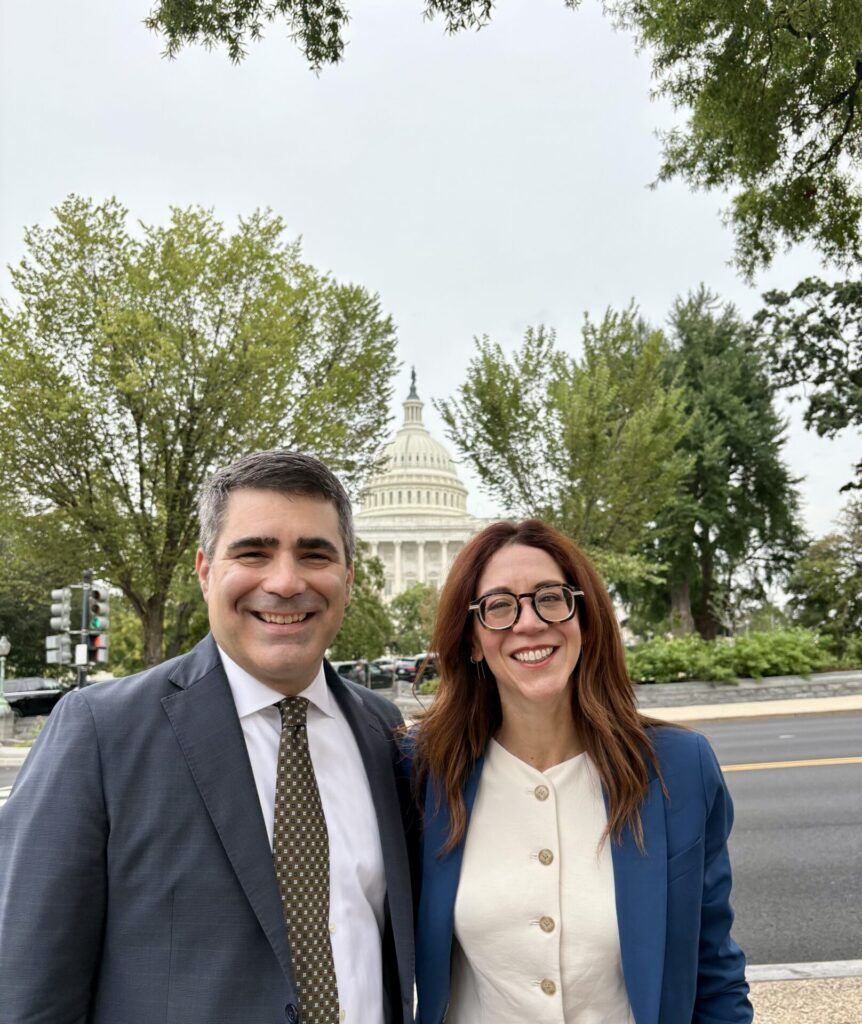 On Rare Cancer Day itself, TargetCancer Foundation CEO Jim Palma and ocular melanoma survivor Katie Doble joined a team that visited Capitol Hill in Washington, DC, to meet with legislators. Their mission: to put faces and stories to the urgent need to preserve rare cancer research funding. Katie’s journey is a testament to why this work matters. In 2013, she was diagnosed with ocular melanoma that spread to her liver a year later. With no FDA-approved treatments available, her diagnosis was terminal. “My doctor told me I had basically 16 months to live,” she said. But with her husband and family by her side, Katie spent her 30s in and out of clinical trials across the country. They became her lifeline. She then became eligible to receive tumor- infiltrating lymphocytes (TIL), a breakthrough therapy that originated in a federally funded lab, and she has now had no evidence of disease for more than a decade. Katie is living proof of what’s possible when rare cancer research is funded. Later that evening, joined by TCF President Kristen Palma, Katie and Jim spoke at a special in-person reception hosted by NORD, which also featured the work of Fred Hutch’s Dr. Taran Gujral, a systems biologist who runs The Transformative Rare Cancer Initiative (TRACER). TRACER created a drug-matching platform that uses patient tumor tissue and artificial intelligence to help researchers, clinicians, and patients—especially those dealing with rare cancers for which there are no existing treatments—identify possible effective treatments that have already gone through clinical trials and received FDA approval.
The Webinar: Real Stories, Real Impact
Perhaps the most meaningful moment of Rare Cancer Day 2025 was our webinar, “Paying With Our Lives: The Impact of Federal Funding Cuts on Rare Cancer Research.” I had the privilege of moderating this vital conversation with Linds Brown and Dr. Sara Selig, two remarkable members of the rare cancer community whose stories illuminated what’s at stake.
The context is sobering: government-backed research has transformed rare cancer treatment over the past 30 years, helping prevent more than 4 million deaths. According to a recent study in The Journal of Clinical Oncology, featured in The New York Times, every $326 our government spends researching cancer extends a human life by one year. That’s not just a number—it’s families, birthdays, time with loved ones, and countless more lives that could be saved.
But the system that produced this extraordinary success—the crown jewel of global life sciences, the National Institutes of Health—is being dismantled. America’s cancer research system, which has helped save millions of lives, is under threat in one of its most productive moments.
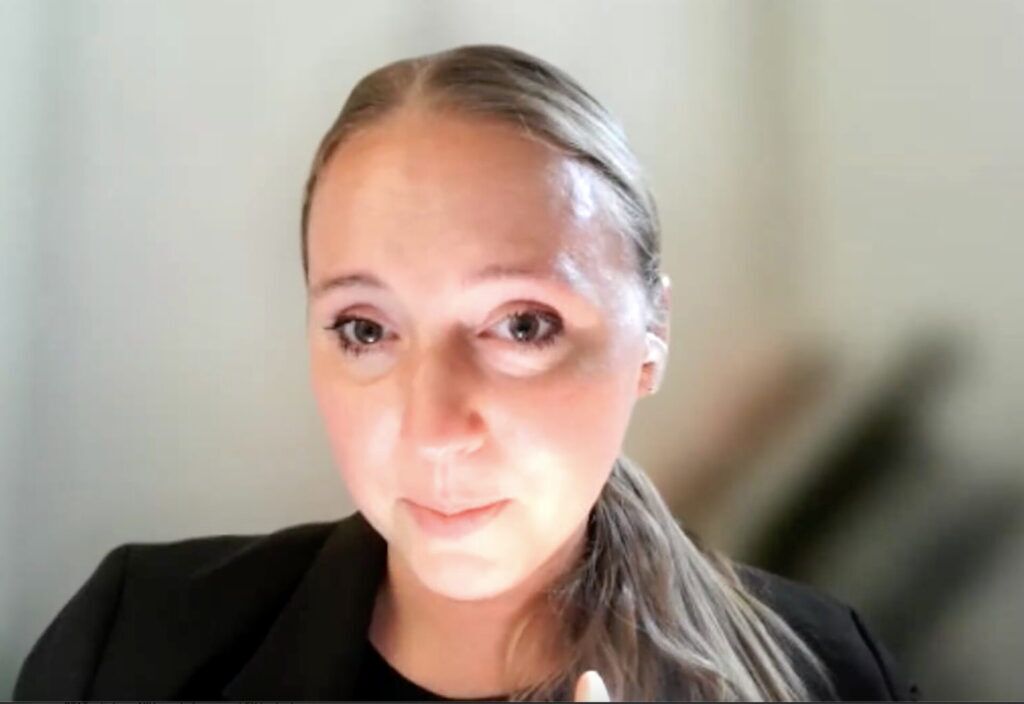 Linds Brown shared her journey with raw honesty. Diagnosed with ocular melanoma in May 2022, when her three kids were all under the age of 12, her world was flipped upside down. Eighteen months after her initial treatment, the cancer had metastasized to her liver—a statistically likely outcome for 90% of ocular melanoma patients. It was then that she entered into her first clinical trial to access an investigational medication that could target a unique genetic mutation of her cancer. As Linds powerfully stated, “The hope that trial gave me was profound. It gave me access to hope, and the gift of moments with my kids at the breakfast table.”
She reminded us that the scientific progress supporting clinical trials doesn’t just happen out of thin air—it starts as early-stage research in federally funded university labs. That it takes years of work to give patients without other options something to try. And that the reason any rare cancer treatments exist is because, at one point, they were ideas funded in a lab that proved safe and effective enough to be tested in clinical trials.
 Dr. Sara Selig, a public health physician at Brigham and Women’s Hospital and Division Director for Research Shared Services at ASCO, brought both professional expertise and deeply personal experience to the webinar. Her husband Greg was diagnosed with ocular melanoma in 2006. As newlyweds just starting their lives together, they faced a tough road. At the time, there were no FDA-approved drugs and no melanoma clinical trials that would accept Greg because his rare subtype was considered an exclusion criterion. First-in-human clinical trials, built on decades of preclinical research, became their lifeline. Those clinical trials gave Sara, Greg, and their daughter another four and a half years together, filled with birthdays, trips, and love.
“I feel angry and sad that Linds and others are going through this same struggle so many years after Greg,” Sara said. “Even with how far we’ve come—two FDA-approved drugs and multiple clinical trials—there is still so far to go. We cannot stop funding. We cannot go back.”
The Path Forward
If the federal government continues cutting funding for medical research, people will die. That’s not an exaggeration—it’s the reality facing Americans affected by rare cancers, as already limited chances for new treatments slip away.
That’s why TargetCancer Foundation’s Paying With Our Lives: Save Rare Cancer Research advocacy campaign is so critical. We’re working to collect 50 stories from 50 states to show policymakers why restoring rare cancer research funding matters.
Whether you pass along Linds and Sara’s experiences—or share your own—Every social media post. Every message. Every share. Can make a difference.
Join us.
#SaveRareCancerResearch