This reflection is written by Hetal Vig, MS, MGC, Director of Research and Clinical Engagement at TargetCancer Foundation.
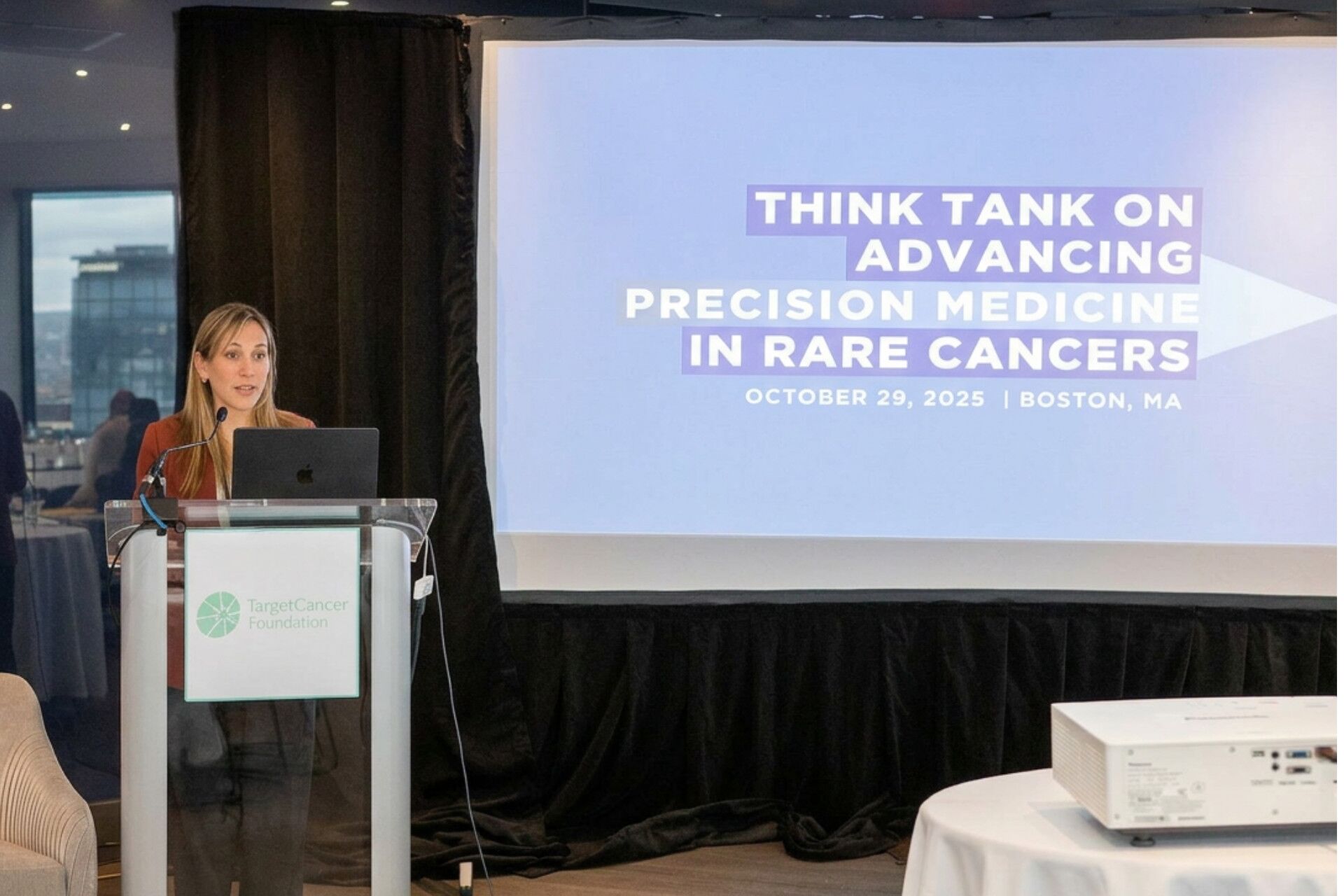
At TargetCancer Foundation’s 4th annual Think Tank on Advancing Precision Medicine in Rare Cancers, Dr. Andrea Cercek of Memorial Sloan Kettering Cancer Center shared some truly paradigm-shifting progress for targeted treatment in rectal cancer and beyond. Her talk highlighted a study published in The New England Journal of Medicine that shows how a specific type of immunotherapy can completely eliminate certain cancers without the need for surgery.
This cutting edge research has been highlighted in The New York Times as well as TIME. For patients and families affected by rare cancers, this represents a hopeful step toward more effective and less invasive treatments. As Dr. Cercek stated in the cited TIME article, “The bottom line is that everyone did benefit. No one was harmed. It takes home the message that therapy like this can lead to significant clinical complete responses, tumor downstaging, and significant improvement in the quality of life of patients.”
The Promise of Immunotherapy
In this study, researchers treated patients who had early-stage tumors with a specific genetic feature called mismatch repair deficiency, or dMMR.
Instead of going straight to surgery to remove the tumor, these patients received an immunotherapy drug called dostarlimab for six months. The results were remarkable in rectal cancer patients, where every patient had their tumor eliminated, and the vast majority of patients in the study had a complete response and remained cancer-free after two years.
This treatment works by helping your immune system recognize and destroy cancer cells. Immunotherapy works especially well for cancers with mismatch repair deficiency (dMMR) because those tumors have so many DNA “mistakes” that the immune system can easily recognize them as abnormal.
Understanding dMMR: The Body’s Broken Spell-Checker
Every time cells divide, they copy their DNA. Small “typos” can happen during this process, but healthy cells have a built-in spell-check system called mismatch repair to fix those errors.
When this system doesn’t work properly, the cells have mismatch repair deficiency and those mistakes build up. Over time, they can cause cancer. But there’s a silver lining: all those DNA errors make the tumor stand out to the immune system, making it more likely to respond to immunotherapy.
What This Means for Patients
This new approach could spare some patients from major surgery and its potential complications, while preserving organ function and improving quality of life.
The treatment was also very safe — more than 90% of patients had only mild or temporary side effects, and surgery remained an option if needed later.
Potential Impact on Rare Cancers
While the study focused primarily on early stage rectal dMMR tumors amenable to surgery, it also looked at non-rectal dMMR tumors that included many rare cancers. A high proportion of patients across different early stage dMMR tumors were able to preserve their organs when treated with this immunotherapy, vastly improving quality of life while undergoing treatment. These findings open an exciting door for patients with rare cancers that share the dMMR genetic feature. As this research continues to expand into rare cancers, it highlights the importance of clinical trials and precision medicine for these patients and shows real promise ahead.
Dr. Cercek’s groundbreaking study marks a major milestone in personalized cancer care, and we were honored and grateful to her for sharing her findings with us at our Think Tank. We look forward to continuing to support innovative work that will bring new therapies to rare cancer patients in such urgent need of better options.
Learn About Rare Cancer Treatments and Clinical Trials
At TargetCancer Foundation, we are committed to providing resources with reliable information to help patients and families navigate the rare cancer experience. These educational resources are available on our website and give practical tools and information to help patients make informed decisions: