
In 2015, a few weeks into my first job working with patients at Mass General Hospital, I met a mother who lost her adult son to cancer and now spent her weeks in the waiting room knitting hats for patients. I met a young father with blood cancer who told me about his hope to watch his daughter grow up. I met a woman with metastatic lung cancer who explained that her weekly trips to the infusion center would last for the rest of her life. These moments, and countless others, stay with me as a reminder that behind every data point and protocol lies a person’s hope, family, and time. It’s a lesson I take with me in my role at TargetCancer Foundation.
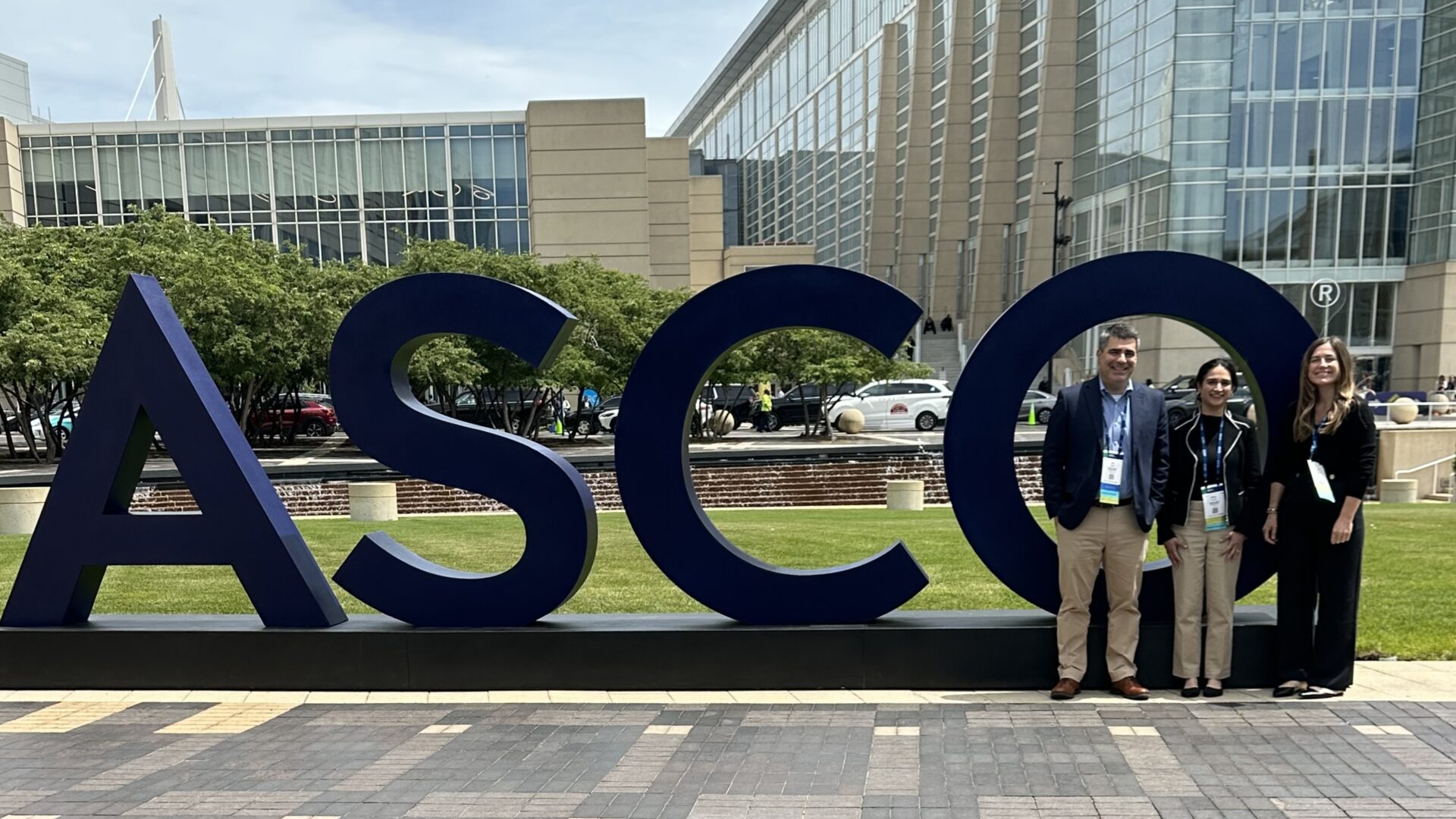
This lesson was on my mind as I attended the 2026 American Society of Clinical Oncology (ASCO) Annual Meeting, a cancer conference drawing over 44,000 people worldwide to Chicago’s McCormick Place. I’ve attended many smaller cancer conferences, but nothing prepared me for the scale of ASCO. Walking the halls, I passed thousands of people who have dedicated their careers to solving the most complex problems in cancer.
In many ways, the enormity is inspiring: Thousands of people come together to solve a set of incredibly important challenges. It’s also a reminder of how complex and fragmented these challenges are. Every researcher is chipping away at their own piece, whether it’s a more sensitive diagnostic test, a new trial design, or a better preclinical model. This is exactly why TCF hosts our annual Think Tank on Advancing Precision Medicine in Rare Cancers each fall, bringing together clinicians, researchers, industry representatives, advocates, and patients to collaborate on common challenges in rare cancer research and treatment.
Presenting The TRACK Study
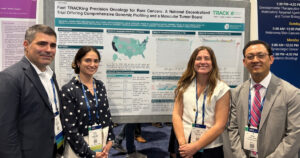 Without a doubt, the personal highlight of the conference was the opportunity to present the latest TCF-001 TRACK study poster, titled “Fast-TRACKing precision oncology for rare cancers: A national decentralized trial offering comprehensive genomic profiling and a molecular tumor board,” alongside TCF CEO Jim Palma and Director of Research and Clinical Engagement Hetal Vig. It was a chance to underscore the importance of providing mechanisms for patients with rare cancers to access biomarker testing. We were able to showcase that decentralized clinical trials are not only possible, but also effective. Almost 10% of TRACK patients with evaluable results had alterations matching an FDA-approved tissue-agnostic therapy, an important datapoint to advocate for broader molecular testing for patients with rare cancers everywhere.
The Pancreatic Cancer Plenary
The biggest news to come out of ASCO 2026 came during a plenary session on a drug for patients with metastatic pancreatic cancer, which is known for being incredibly aggressive and difficult to treat. The trial drug nearly doubled patients’ survival time.
I wasn’t able to find a spot inside the hall, but I was sitting right outside when the survival curve flashed onscreen. The crowd burst into applause. Many were brought to tears. It was a striking reminder of the promise of science and research, and how badly people want more time for patients.
It also made me think about the patients with other difficult-to-treat cancers that don’t have any treatment options available to them. It’s the tension I keep coming back to. ASCO is full of moments that show us what’s possible, yet it’s also full of reminders of how much further we have to go, especially in supporting patients with rare cancers.
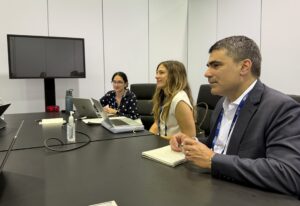 Conversations with patients, caregivers, and advocates throughout the weekend were a continuous reminder of why this work can’t wait. TCF’s three primary areas of focus – driving research, convening experts, and empowering community – exist so that patients with rare cancers can get the support that they need and deserve.
What This Means For The Work Ahead
As I sit at my desk, I think about my experience at ASCO with renewed urgency and optimism that I will bring to my day-to-day work. What does this look like? It means supporting the TCF-001 TRACK clinical trial so that more patients with rare cancers can access biomarker testing and expert treatment recommendations. It means being the voice on calls with other organizations to ensure that patients with rare cancers are part of the conversation. Most importantly, it means holding close the memory of every person I’ve met over the years whose life has been impacted by cancer, a constant reminder of why this work is so important.
This reflection was written by Mary McGillicuddy, MBA, Associate Director of Clinical Research at TargetCancer Foundation. Mary brings a decade of experience in cancer research operations and patient-partnered research, and she believes deeply in the power of patient-centered research to advance rare cancer care, driven by the patients and families whose stories fuel her commitment to the work.